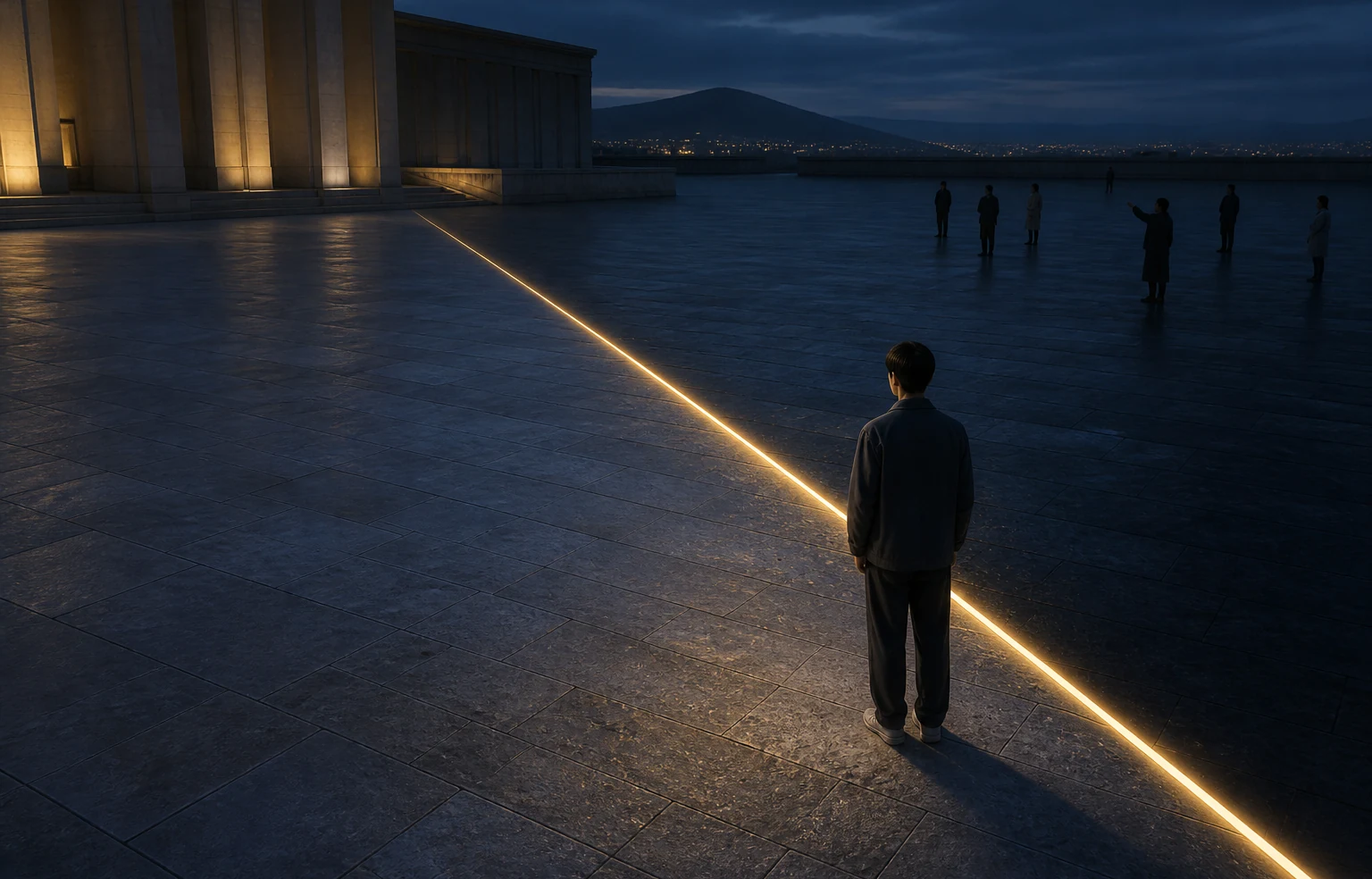
This essay begins with the label “borderline” and separates an actual rule violation from mere proximity to a boundary: if no law, platform rule, or agreement has been breached, the conduct remains within the permitted space. The deeper danger is a shadow boundary built by public pressure outside the formal rules, where “I dislike this” quietly becomes “this should not exist” and the most sensitive reaction keeps shrinking everyone’s room. The author does not argue that compliant content is beyond criticism; people remain free to criticise, unfollow, block, or look away. A mature free order also requires tolerating things we dislike when they remain within clearly stated rules.
I have always found one particular habit on social media rather absurd: some people seem especially fond of condemning others for being “borderline.”
Because even the label itself is strange.
What is the line?
A boundary is called a boundary because it separates what is allowed from what is not. Break the law, and it is illegal. Break a platform’s rules, and it is a violation. Break an agreement between two parties, and it is a breach.
But if nothing has been broken and someone has merely moved close to a boundary, then they are, by definition, still inside it.
So why has proximity to a boundary gradually become an offence of its own?
If a rule says you may not go beyond 100, then 99 should be permitted.
You cannot tell people that the limit is 100, then leap up when someone reaches 99 and say:
“You may not have broken the rule, but getting this close to the red line is still wrong.”
If that is so, what meaning does the line retain?
A genuine boundary should mean that a space for free action exists inside it. It should not require everyone to keep retreating from the line simply to prove their “moral virtue.”
The real danger is not the boundary, but the boundary beyond it
What deserves our attention, I think, is a very common social pattern:
The formal rule has not changed, yet public opinion builds another set of vague and steadily tightening informal rules outside it.
At first, the instruction is:
“Do not cross this line.”
Then it becomes:
“It would be better not to get close to this line.”
Later:
“Nothing that reminds people of this line should appear at all.”
And finally:
“Even if you have broken no rule, you should censor yourself whenever someone feels uncomfortable.”
At that point, the social boundary is no longer determined by law, stated rules, or clear agreements. It is determined by who is most easily offended, who speaks the loudest, and who is best at mobilising an online pile-on.
The boundary keeps moving inward.
The space in which people could once move grows smaller, until everyone stops asking whether they have followed the rules and starts wondering:
“If I do this, will someone attack me for it?”
Those are entirely different conditions.
Following rules creates order.
Fear of being mobbed creates a chilling effect.
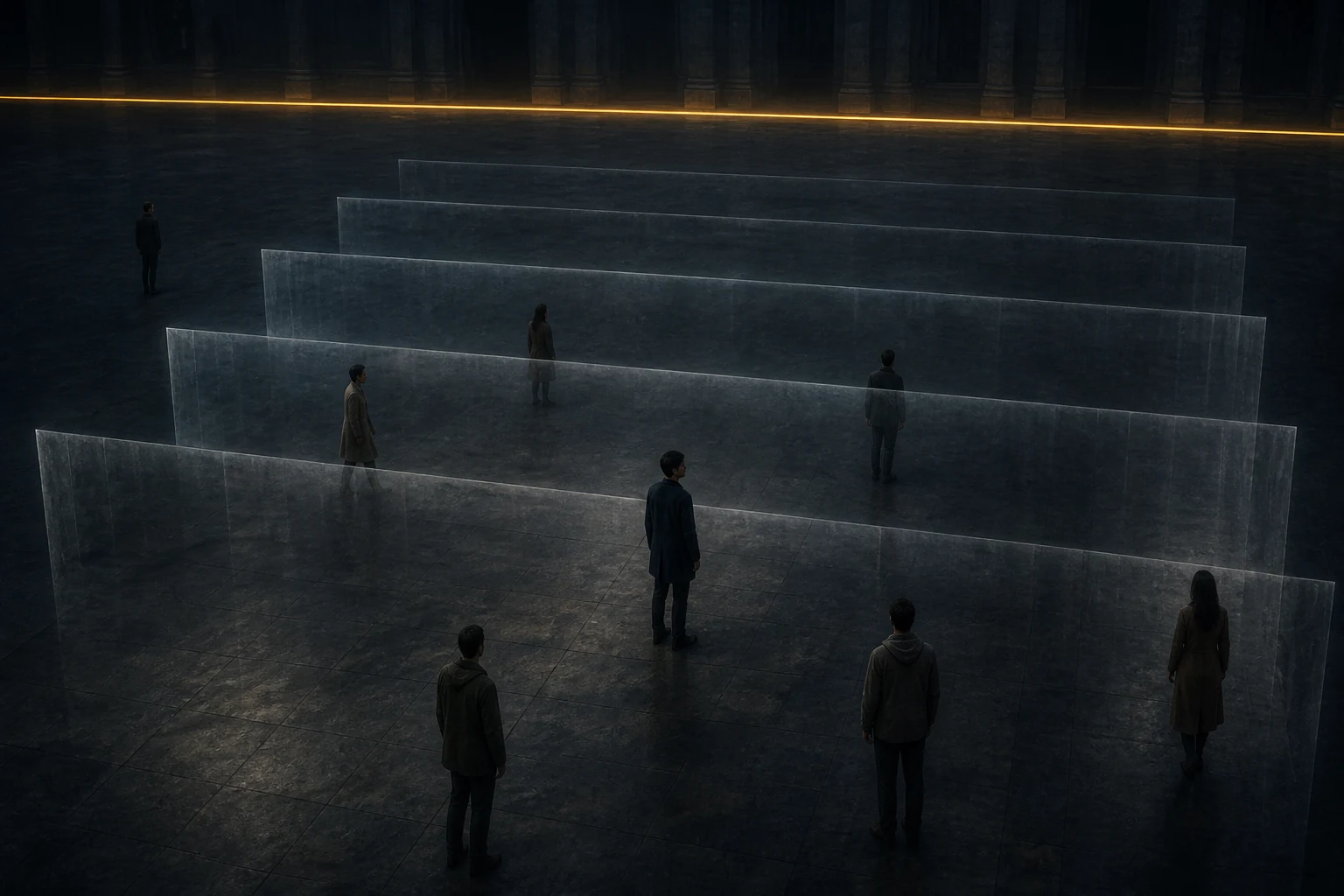
“I dislike this” and “this should not exist” are not the same claim
None of this means that something becomes immune to criticism merely because it is legal and compliant.
You are perfectly free to find an influencer vulgar, an advertisement ugly, or someone’s deliberate use of sexual suggestion tiresome. You can choose not to watch, block the account, or unfollow it.
All of that belongs to individual freedom.
The problem is that many social-media arguments end in a peculiar substitution.
They move from:
“I do not like this.”
To:
“This should not appear.”
Then:
“Why has the platform not banned it?”
And finally:
“Is there something wrong with everyone who refuses to denounce it too?”
That is what I truly object to.
Aesthetic taste is not a rule.
Nor is a personal moral standard a law.
You may judge something unattractive, unsophisticated, or undignified. That is your judgement. But the fact that your standard is more conservative does not entitle you to redraw everyone else’s room for action around it.
Otherwise, one question becomes unavoidable:
Who gets to decide what is “too borderline”?
Some people think a bikini is borderline.
Some think tight-fitting clothes are borderline.
Some think any selfie that emphasises the body is borderline.
Some think dancing is borderline.
Some can look at an entirely ordinary photograph and extract a whole vocabulary of supposed “suggestions” from its composition, pose, and facial expression.
Once a boundary depends on subjective feeling, it is no longer a real boundary.
The point of a boundary is to let people walk right up to it
Many people seem to assume that “good people” should naturally keep far away from every boundary.
I think the opposite: a healthy society should allow people to explore its boundaries.
Art needs to explore boundaries.
Comedy needs to explore boundaries.
Business needs to explore boundaries.
Expression needs to explore boundaries.
Even much of technological innovation consists, in essence, of continually testing where the boundaries of old rules lie.
If no one is ever allowed to approach a boundary, then it is not really a boundary. It is merely a decorative line drawn around a small central zone.
A mature system of rules should be simple:
State clearly what cannot be done.
State clearly what consequences follow when it is done.
Then, outside those prohibitions, leave people room to be free.
Do not construct a vague code of hidden expectations under which people must not only avoid crossing the line, but stay far enough away from it to escape moral judgement.
Do not let the most sensitive person decide everyone’s freedom
Social rules have a recurring weakness:
If every expression of discomfort makes us shrink the public space a little, then over time the boundary can only become narrower.
There is no upper limit to human sensitivity.
Someone will always find a particular thing indecent, offensive, vulgar, dangerous, or likely to produce the wrong associations.
If public rules are always designed around the most sensitive person, society will eventually be forced to live by its most conservative standard.
That is not civilisation.
Civilisation should include precisely this capacity:
To let things we dislike exist.
I can hate your content without demanding that you disappear.
I can find your taste awful without asking a platform to ban you on my behalf.
I can reject your way of life while accepting that you have the right to choose it.
People were never going to share exactly the same values.
The difficult part of freedom is not allowing the things we love to exist. It is allowing the things we dislike to remain when they are still within the rules.
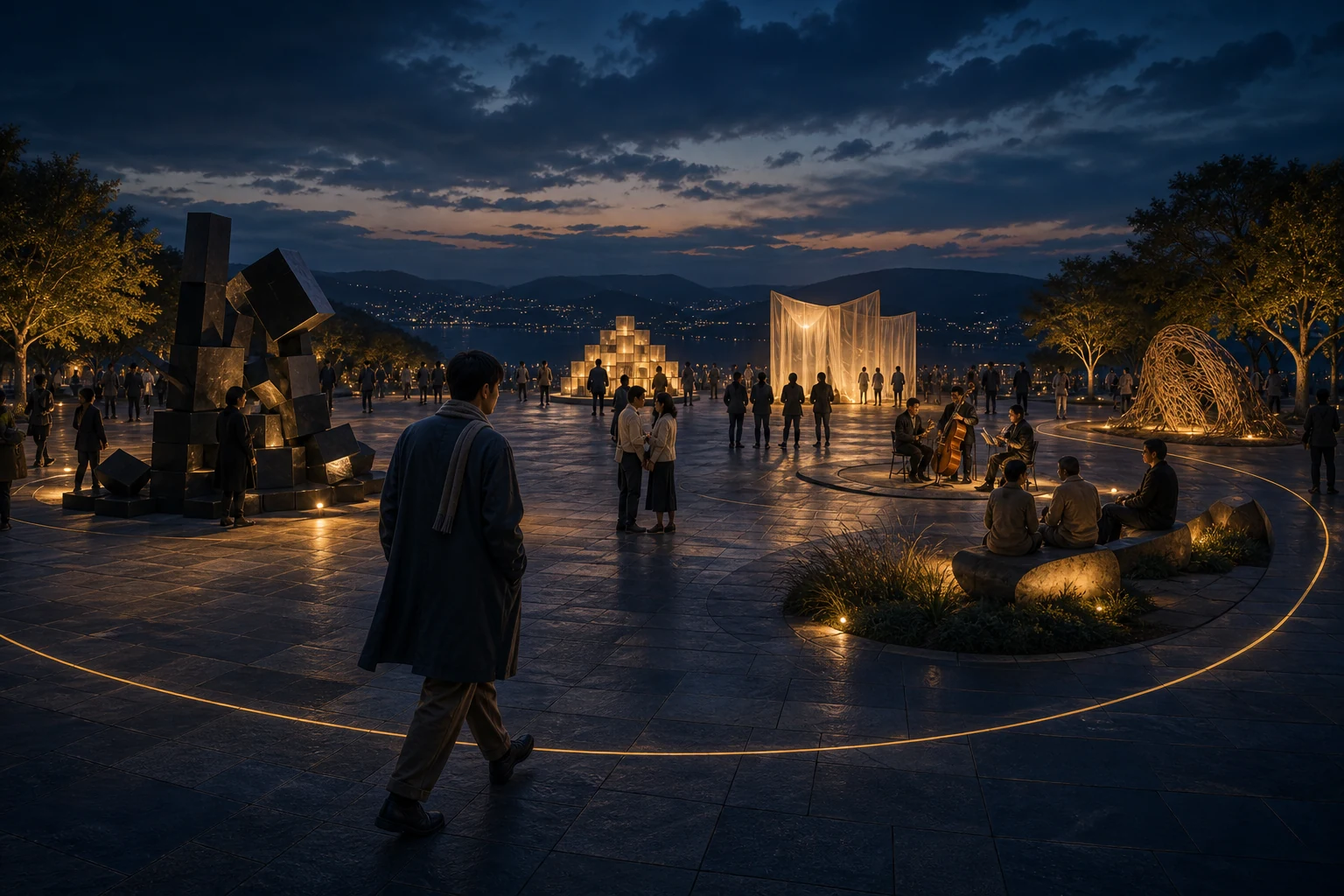
Finally
So whenever I see someone declare, with great indignation:
“This clearly is borderline, even if it has not technically broken a rule.”
I find the sentence revealing in itself.
If you concede that no rule has been broken, you have already established at least one thing:
It is still inside the line.
You are free to criticise it.
But because you dislike seeing someone stand so close to the boundary, do not assume the boundary should be redrawn behind their feet.
Otherwise, today one person is condemned for being “borderline,” tomorrow another for “going too far,” and the day after that the platform is pressed to tighten the rules once more.
In the end, what disappears will not be limited to the content you dislike.
Everyone’s space will disappear with it.
The meaning of a boundary is that people may walk right up to it.
If approaching a boundary becomes an offence of its own, then the boundary is merely a line in permanent retreat.


ABOUT THIS ESSAY
Leave a thought. 00
Discussing: What We Call “Borderline” Is Still Inside the Line
Different perspectives are welcome. Be kind. Both language versions of this essay share this conversation.
No published comments yet. Your thought could be the beginning of a conversation.