From a distance, society’s conformity and absurdity can be dispiriting. Up close, we keep meeting sincere, decent people. These views may coexist: we can question how groups work while leaving room for patience and goodwill towards individuals.
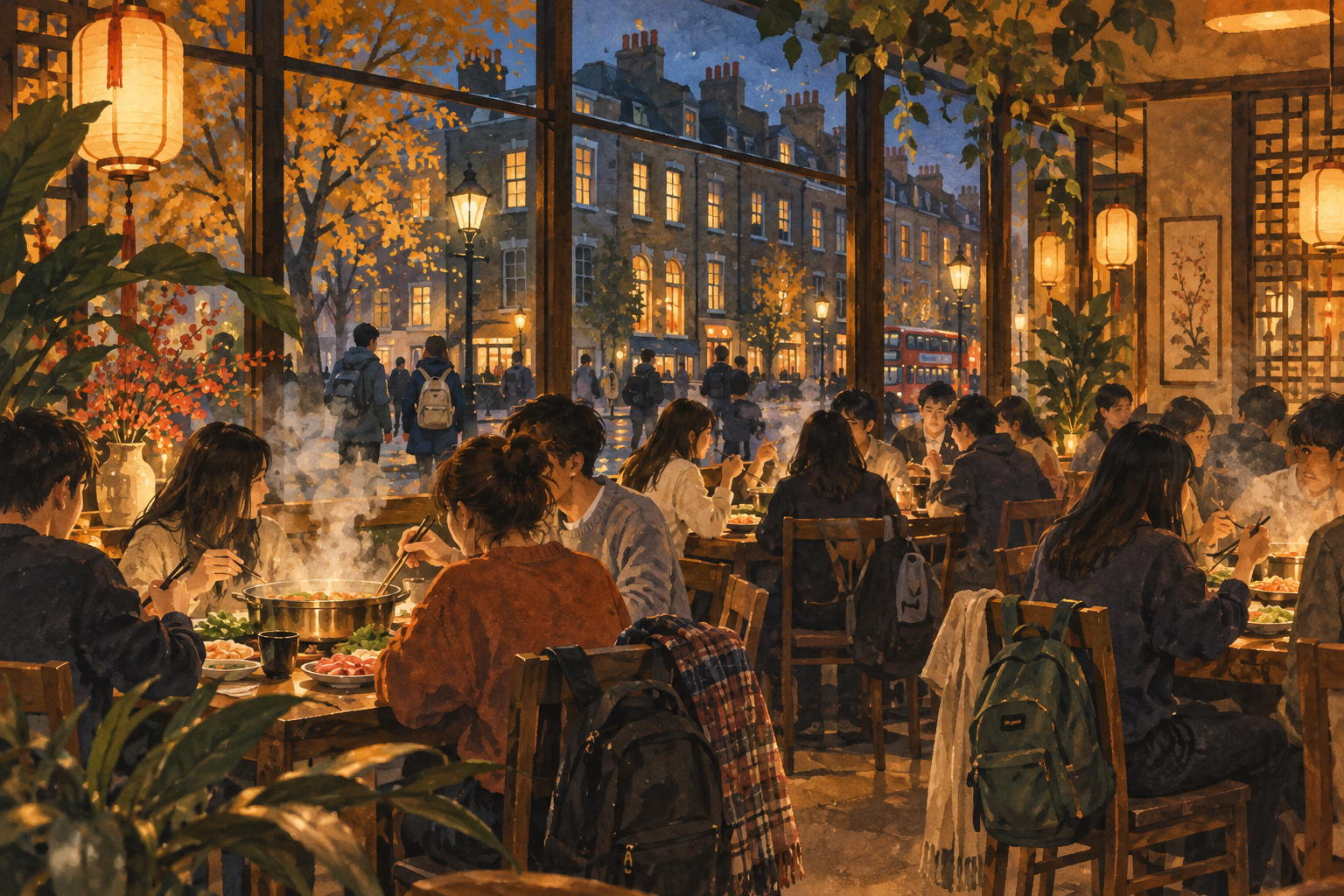
Watching new arrivals in a crowded London hotpot restaurant brings back memories of my own first year. Several nights of clubbing a week have given way to meals, tea and conversation. The friendships haven’t changed; the pace has.
After Jiuzhaigou, a visit to Grandma’s home in Shiqiao brings familiar wontons, quiet bamboo paths, and a small childhood memory of Grandpa—a simple, precious ending to a journey through Sichuan.
Before the Mid-Autumn Festival, a trip through Chengdu, Mount Qingcheng, Dujiangyan, and Jiuzhaigou becomes a reminder that the rarest part of travel is having time together.
AI lowers the barriers to capability while widening the gap between those who know how to use it and those who do not. The crucial divide may be who can integrate it into life and work, making it part of what they are capable of.
I believe that schooling built around standardised instruction will be replaced. As AI makes individual teaching widely available, education should be organised around people, practice and problems worth solving, rather than letting timetables and disciplines define a person.
Beginning with a choice between survival and loyalty to a dog, this essay asks how morality and civilization endure. The challenge is to give goodness the means to survive: boundaries for kindness, and rules that constrain power.
Next-token prediction describes a model’s task, but may not explain everything required to perform it. Can an underlying mechanism rule out higher-level abilities? And when prediction calls for world models, abstraction, and planning, how far is it from thought?