
This essay considers two seemingly opposite experiences of fate: some people disappear for years and reappear in the most unlikely place, while others remain in the same city yet vanish after an entirely ordinary goodbye. A relationship’s meaning, the author argues, cannot be measured only by its length, frequency, or intensity. The strongest friendships can be quiet without becoming distant; they do not demand constant reassurance, yet always preserve a place for the other person. And those who accompany us for only part of the journey do not become less meaningful when that shared road ends. A deep bond does not require daily presence, and an ending does not erase the value of having met. Walk together while you can, live your separate lives when you must, and if your paths cross again, let the conversation continue from a simple: “It’s been a long time.”
I have always been inclined to believe, at least a little, in what we call fate.
That does not mean I truly believe there is a finished script for the world, or that some mysterious force sits behind every meeting and every goodbye. Looking back at my own life and those of my friends, I am struck by the strange ways people drift apart and find each other again.
Some people have clearly drifted away.
You move to different cities and enter completely different circles. Years pass without contact. Eventually, both of you quietly assume that you probably will not meet again.
And then, one day, through a coincidence neither of you could have designed, there they are.
It might happen in another country, at a dinner that has nothing to do with either of you, or simply because a friend suddenly mentions a name. A line you thought had already ended travels an enormous distance and somehow crosses your life again.
Stranger still, these reunions sometimes carry almost no sense of unfamiliarity.
You sit down, exchange a few sentences, and it feels as though the missing years have merely been fast-forwarded.
At moments like that, I always find myself thinking:
Perhaps our time was not over after all.
Yet the opposite can be just as mysterious.
Some people live remarkably close.
You are in the same city. You visit similar shopping centres and eat at similar restaurants. You share some friends and even appear in the same neighbourhoods from time to time.
Statistically, it feels as though you should eventually run into each other.
But you never do.
Someone who was once so familiar simply disappears from your life.
There is no dramatic farewell and no clear date on which the relationship ended.
The last time you met, the two of you may have said quite naturally:
“Let’s do this again soon.”
And then “soon” never came.
Only years later, when the memory returns, do you suddenly realise:
That day was already the last time you would see each other.
You simply did not know it then.
To me, this is one of the most poignant things about human relationships:
So many last times look, while they are happening, like nothing more than an ordinary occasion.
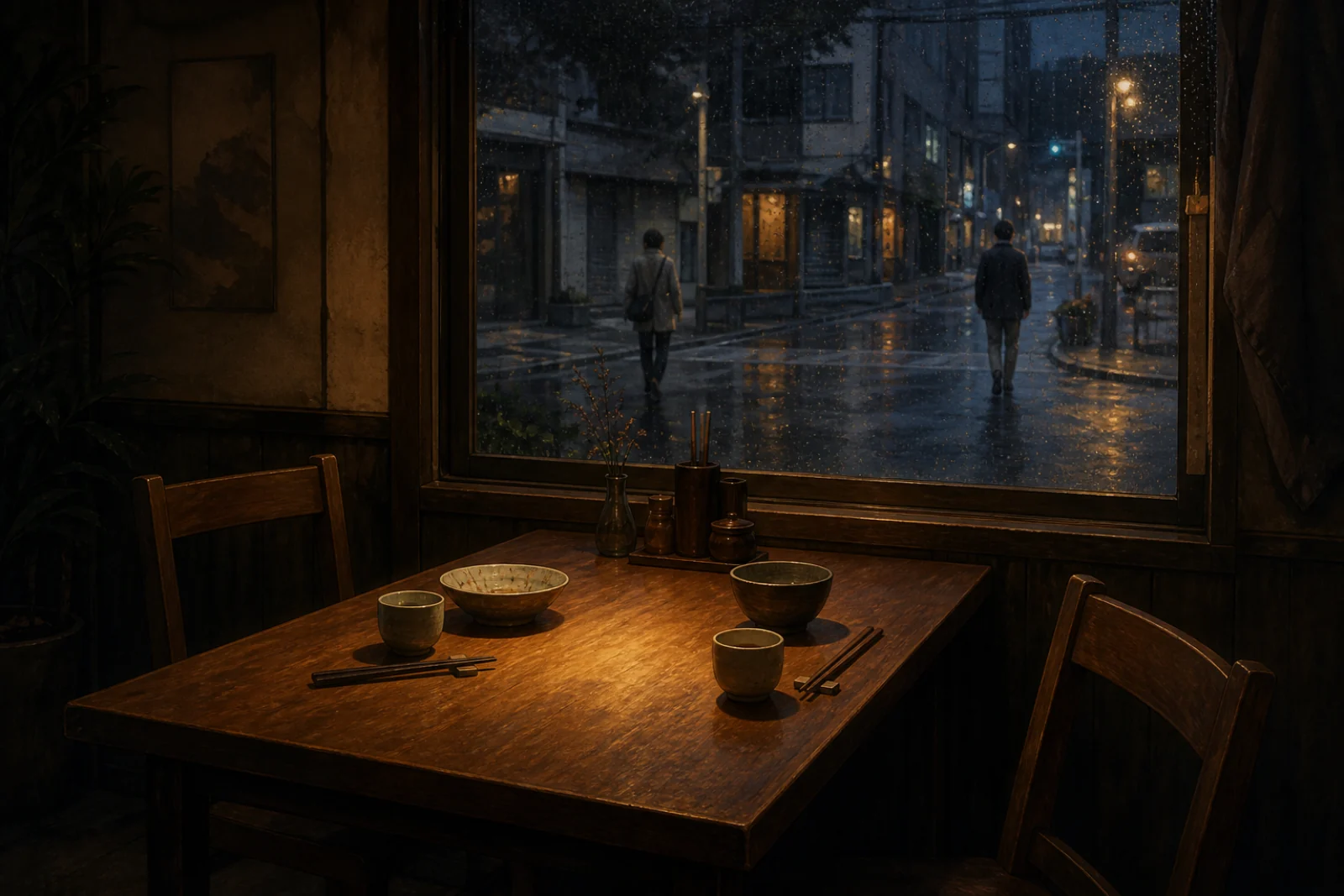
And when I speak of fate, I am not speaking only about love.
Romance is simply the relationship we most readily explain through fate, which is why we hear so many stories about the right people at the wrong time, or about two people who wander in circles only to discover that it was always each other.
In friendship, those turns of fate can be subtler still.
Some friends first enter our lives only because they are classmates, colleagues, friends of friends, or people we happened to meet on a particular trip.
At the time, we could never imagine that this person would remain part of our story for so long.
You go through things together. You travel to places together. You see one another through many different versions of yourselves.
Then, eventually, everyone leaves in a different direction.
Some move to other countries. Some begin entirely different careers. Some enter lives that no longer resemble your own.
Contact may fade.
Yet there are certain people for whom something strange remains true.
Even after years apart, when you meet again, you are still friends.
You do not need to explain who you have become, rebuild the relationship from the beginning, or feel awkward because so much time has passed since your last conversation.
It is as though a relationship that truly matters does not disappear simply because it has been quiet for a while.
It has merely been absent from your everyday lives.
I love the old saying, “The friendship of gentlemen is as light as water.”
When I heard it as a child, it was easy to interpret that “lightness” as a lack of closeness.
Only later did I begin to understand that the lightness may be precisely what makes such a friendship precious.
People who share a real bond do not necessarily need to talk every day.
Nor do they need to prove that they are still friends by meeting constantly and reporting every small event in their lives.
Some people send a message only once every few months, meet only a few times a year, or spend years living in different countries.
Yet you know that if the day comes when you genuinely need them, they will still be there.
And if the day comes when you meet again, you can sit down naturally over a meal, talk about the past, and hear about everything that has happened to each of you in the years between.
The period of silence does not make the relationship false.
Sometimes, in fact, the opposite is true.
The most secure relationships rarely need to be confirmed over and over again.
They are less like a fire that survives only if someone keeps adding wood, and more like an understanding that already has a place in both people’s hearts.
Most of the time, you simply live your separate lives.
When something happens, you help one another.
A long silence does not make either of you wonder whether the other person “still considers me a friend”.
And a message that goes unanswered for a while does not force you to reassess the value of the entire relationship.
I think this may be one of the most comfortable forms friendship can take.
Neither person needs to occupy the other’s life.
Yet each always keeps a place for the other.
Of course, there are other kinds of friends too.
There were times when you saw them almost every day.
You attended classes together, ate together, travelled together, and could call late at night knowing they would come out to meet you.
It was easy then to fall into an illusion:
Surely this relationship would always continue in the same way.
Only later do we discover that spending a great deal of time together does not necessarily mean a relationship will last longer.
Sometimes two people appear naturally in each other’s lives every day simply because they are in the same school, the same company, or the same city.
Once that shared environment disappears, the relationship slowly fades with it.
Other people have no such environment holding them together, yet many years later they can still share an entirely natural closeness.
So perhaps a relationship really cannot be measured by how often two people talk, or by how many times they meet in a year.
Some people talk every day and still drift apart without warning.
Others do not meet for years and find, when they do, that nothing essential has changed.

I used to think that a genuinely good relationship should last for a very long time and remain at a certain level of intensity throughout.
If two people eventually stopped speaking, it seemed to mean that what they once shared could not have mattered very much.
Looking back, I am not so sure.
Someone can appear in your life for only six months and still leave a profound mark on you.
A friend may accompany you through only one part of university.
A teacher may teach you for a single year, yet say one sentence that remains with you a decade later.
A partner may work with you on only one project, yet permanently change the way you approach your work.
There are even people whom you may never see again.
That does not erase what happened between you.
Relationships do not have to be measured by length.
Nor do they have to be measured by frequency.
Some people were always meant only to walk beside you for a particular stretch of the road.
When that stretch ends, they leave.
It does not mean that anyone did something wrong, or that meeting in the first place had no value.
It simply means that this part of the journey you shared has come to an end.
This is why I think the most interesting thing about the word “fate” is not its ability to explain anything.
It is the way it allows us to look at relationships between people.
Some questions do not need to be forced into an answer.
Why did I meet this particular person?
Why did we later drift apart?
Why were we able to meet again after so many years?
Why did we live in the same city and never see each other again?
Why can some people go years without speaking and never truly become distant?
Of course, many of these things can be explained rationally.
Social circles, probability, geography, mutual friends, the paths our lives take.
None of those explanations is wrong.
But after you have experienced a few astonishingly unlikely reunions, and a few relationships that vanished completely without any conflict at all, it is difficult not to feel:
The points at which our lives intersect seem to follow a rhythm of their own.
This is how I now like to understand relationships:
A deep bond does not mean seeing each other every day. And when a bond has run its course, that does not mean the meeting itself was meaningless.
The people with whom we share a genuine fate may not remain beside us all the time.
They have their own lives, their own cities, their own work, their own families and friends.
You do not need to report your lives to one another every day, and you do not need to fear that distance will automatically destroy the relationship.
When you can walk together, walk together well.
When you have to part for a while, live your separate lives.
If the bond remains, then the next time you meet, you can still sit down over a drink and say:
It’s been a long time.
And then continue the conversation as you always did.
The world is vast, and every person’s path through life keeps changing.
Some people will remain by our side.
Some will slowly leave.
And some will live their own lives far away, apparently sharing very little with us any more, yet somehow remain our friends.
I think that kind of relationship is beautiful too.
We do not need to see each other all the time.
We do not need to speak every day.
Knowing that we are both still here is enough.
As for the people we are truly meant to meet—
Even across the ends of the earth,
after travelling a very, very long way,
perhaps our two lines will still cross again.



ABOUT THIS ESSAY
Leave a thought. 00
Discussing: Some People Will Find Their Way Back to You, No Matter the Distance
Different perspectives are welcome. Be kind. Both language versions of this essay share this conversation.
No published comments yet. Your thought could be the beginning of a conversation.