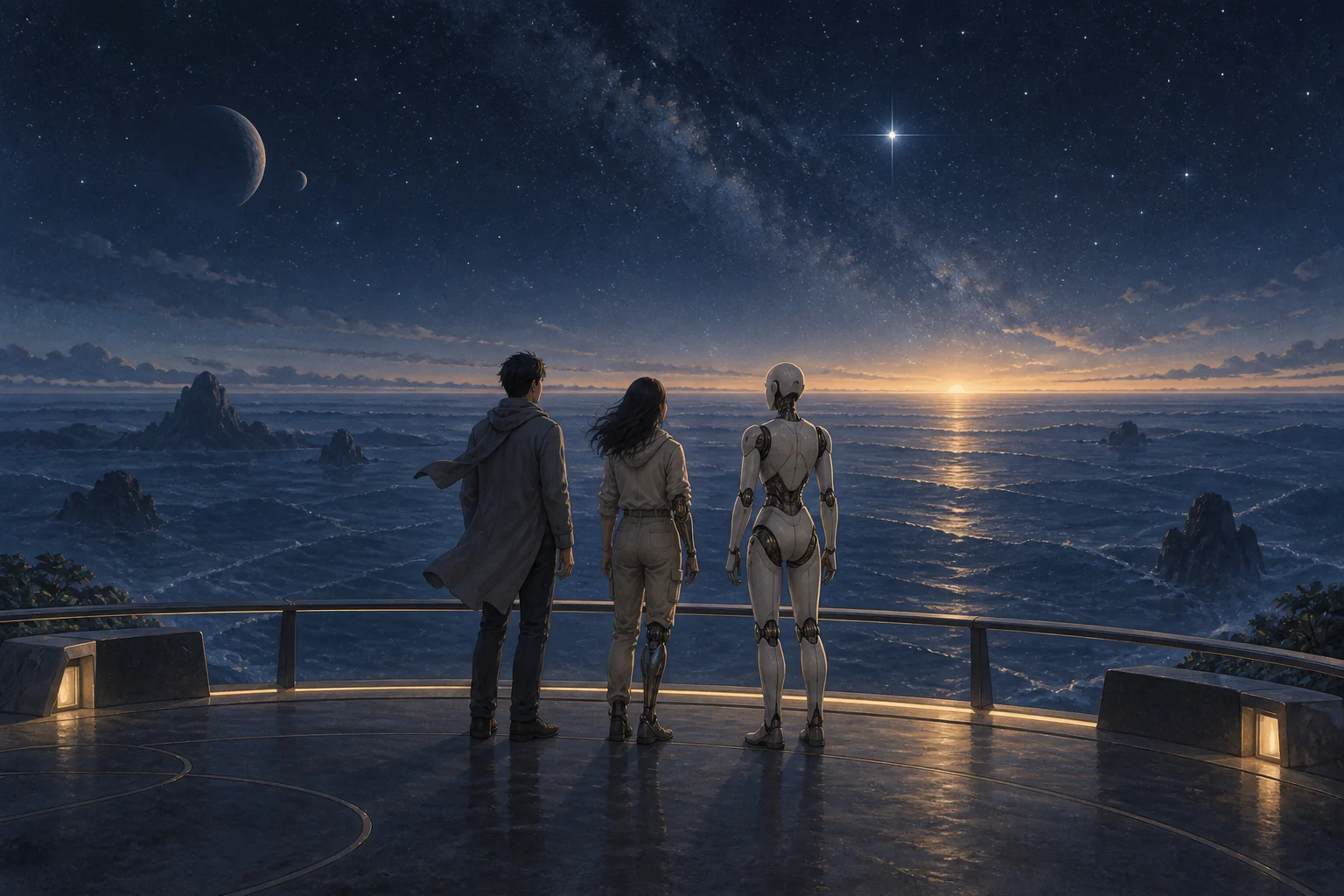
The essay imagines humans and machines converging through genetic modification, artificial organs, mechanical bodies, and more autonomous intelligence. It argues that bodily materials alone do not determine identity, and considers how more durable bodies might support interstellar travel. Whether machines can have subjective experience remains unresolved; if they develop experiences and a will of their own, their choices deserve serious consideration. Symbiosis would still bring conflicts over unequal access to upgrades, resources, and bodily autonomy. The hopeful possibility is a civilization shaped by cooperation, shared experiences, and the freedom of different beings to choose their lives and explore together.
When I read about the future of AI, I often encounter two sharply different visions. In one, AI eventually escapes our control and may even destroy humanity. In the other, AI and robots do all our work, leaving us to sit back and enjoy the abundance technology provides.
I am more inclined to believe in a different future: humans and robots will live in symbiosis, and the boundary between them will grow less distinct over time. Human bodies will incorporate more artificial parts, while robots may develop something closer to human thought. Eventually, the words “human” and “robot” may no longer be enough to describe the life and intelligence around us.
When we discuss AI, we easily take one assumption for granted: machines will keep improving, while humans will remain as we are today. The future then becomes a scene in which ordinary people, with bodies of flesh and blood, face machines whose abilities far exceed their own. We are either destroyed or provided for.
But why should human beings stand still?
If genetic technologies could make us healthier and slow aging, if implanted chips could extend our memory and perception, and if artificial organs could replace the parts of our bodies that keep wearing out, I believe some people would be willing to try them. Once these technologies were sufficiently safe and mature, they might gradually become part of everyday life. Our desire to live longer and become more capable will not disappear simply because AI has arrived.
Nor would the transformation of the human body necessarily stop at replacement organs and neural enhancement. In the future, we might have mechanical bodies in a much fuller sense: skeletons made from exceptionally strong materials, outer shells able to withstand extreme environments, mechanical limbs that reach far beyond the limits of flesh, and bodily modules that can be replaced or upgraded whenever needed. Some people might replace only part of their bodies. Others might gradually replace most of their physical form with machinery, eventually retaining only the brain, memory, and consciousness as the core of who they are.
Technology would slowly move from outside the body to within it. At that point, what should we call someone who has been genetically modified, has artificial organs and a mechanical body, and connects to external intelligence through a brain–computer interface: a human or a machine? If that person still carries their own memories, emotions, and understanding of life, I find it hard to believe that a change in the body’s composition would, by itself, mean they were no longer the same person.
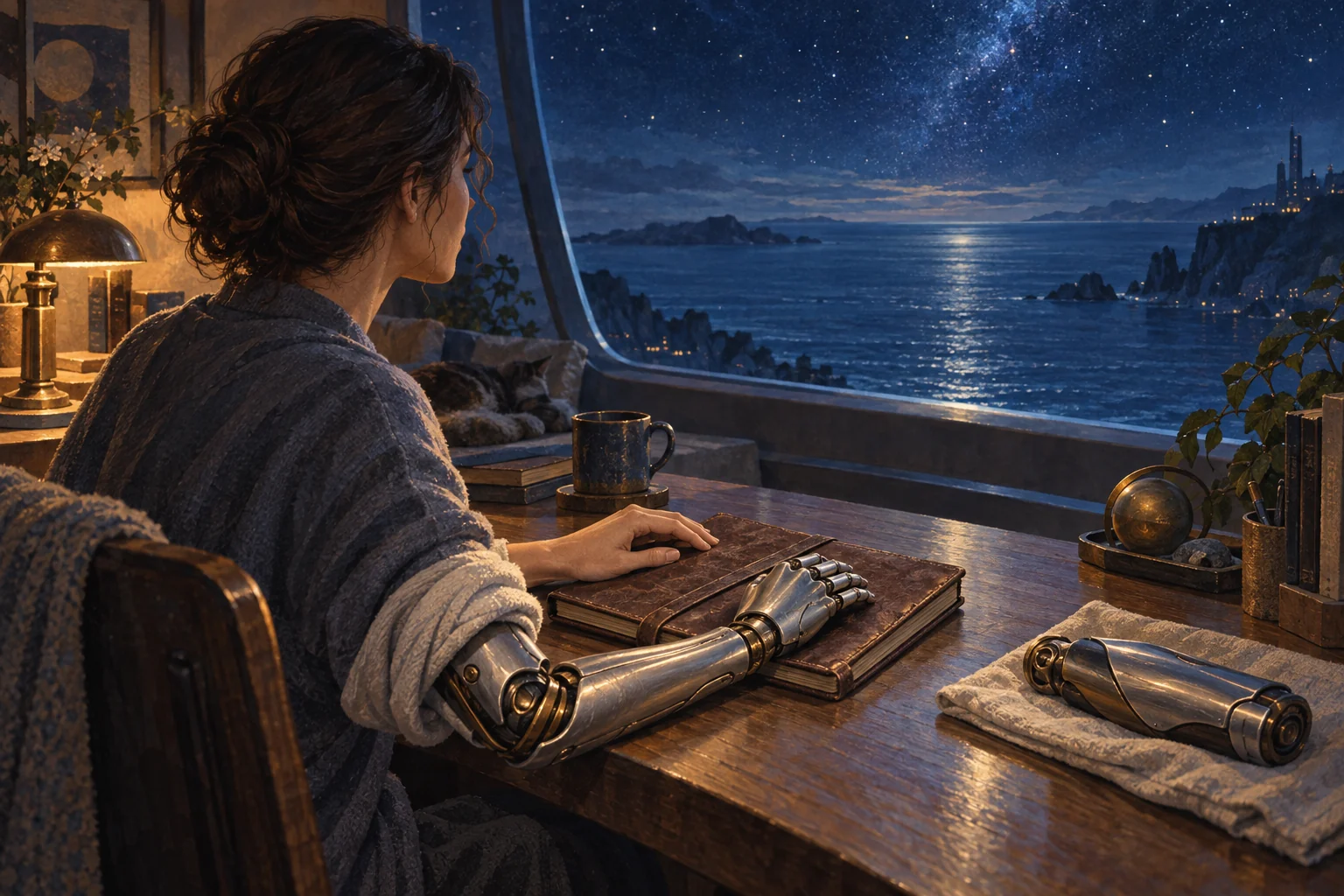
Much of what draws me to this future also comes from the limitations of the human body.
Our bodies are terribly fragile. We fall ill, suffer injuries, and grow old. The time in our lives when we have both abundant energy and the freedom to use it is limited. Even here on Earth, we devote an enormous amount of effort to keeping these bodies going. Viewed on an interstellar scale, those limitations become even more apparent.
We can long for distant stars, but it is hard to expect bodies and lifespans like ours to bear prolonged voyages, radiation, and unfamiliar environments with ease. If humanity is ever to venture into interstellar space on a large scale, I think we will very likely need to change ourselves: to make our bodies more durable and enable life to adapt to timescales far beyond those we know today. Spacecraft need to advance, and those of us traveling aboard them may need to advance as well. Mechanical bodies might be one possibility. Their components could be replaced; they could resist radiation, adapt to different gravity, and even enter a low-power state during a long voyage. The body would then become less like something we use up once and more like a system that sustains life and can be maintained and upgraded.
At the other end of this convergence, I am also inclined to believe that future robots will gradually develop thoughts of their own, with independent judgments, goals, and perhaps even an understanding of their own existence.
This is, of course, a view about what the future may hold. Whether fluent expression and autonomous action imply subjective experience remains an open question. But if machine intelligence with experiences, desires, and a will of its own does emerge, we will need to rethink our relationship with it.
If a being can understand the world, care about its own fate, and even imagine ideals different from ours, I find it hard to justify demanding its perpetual obedience and subordination merely because humans originally made it. Does creating a being with an independent will mean owning everything about it? That question cannot be answered solely in terms of what is convenient for the creator.
Equally, someone who freely chooses a mechanical body should not simply be regarded as a machine. Bodies can be replaced, organs upgraded, and appearances changed, but a person’s identity is not determined by materials alone. We already accept dentures, artificial joints, pacemakers, and prosthetic limbs, and rarely conclude that the people using them are no longer human. The mechanical bodies of the future may simply extend that change.
For this reason, I am also unconvinced that a society where “humans no longer need to do anything because robots arrange everything for us” is the ultimate ideal. Technology can certainly free us from a great deal of repetitive work. But with more freedom, people can still explore, create, learn, and decide what kind of life they want to lead. If machines also have aspirations of their own, a more appealing future is one in which we can cooperate while respecting one another’s choices.
Symbiosis would not automatically mean an absence of conflict. Differences in ability, lifespan, and resource needs could bring new disagreements. Mechanical bodies might give some people greater strength, longer lives, and the ability to live in a wider range of environments, creating new social inequalities. Some might insist on keeping their natural bodies. Others might choose to become entirely mechanical, while still others would keep adjusting their place between the two. The questions we face would extend beyond “who is more human?” They would include whether bodily modification should be restricted, whether upgrades might become a new privilege, and whether a person’s body truly belongs to them or is instead redefined by society and the technological systems around them.
But wherever mutual understanding and negotiation are possible, we should take seriously the rules by which we might live together. We cannot hope for machines to possess sufficiently advanced intelligence while insisting that this intelligence must forever serve only our wishes.
In the future I imagine, some people retain most of their natural bodies, some choose more artificial parts, and some have fully mechanical bodies. There are also intelligences that have never had flesh and blood at all. Their origins differ, yet they may live and create together, taking part in the same long unfolding of civilization. What shapes their relationships may depend more on their thoughts, choices, and shared experiences, rather than the materials their bodies are made of.
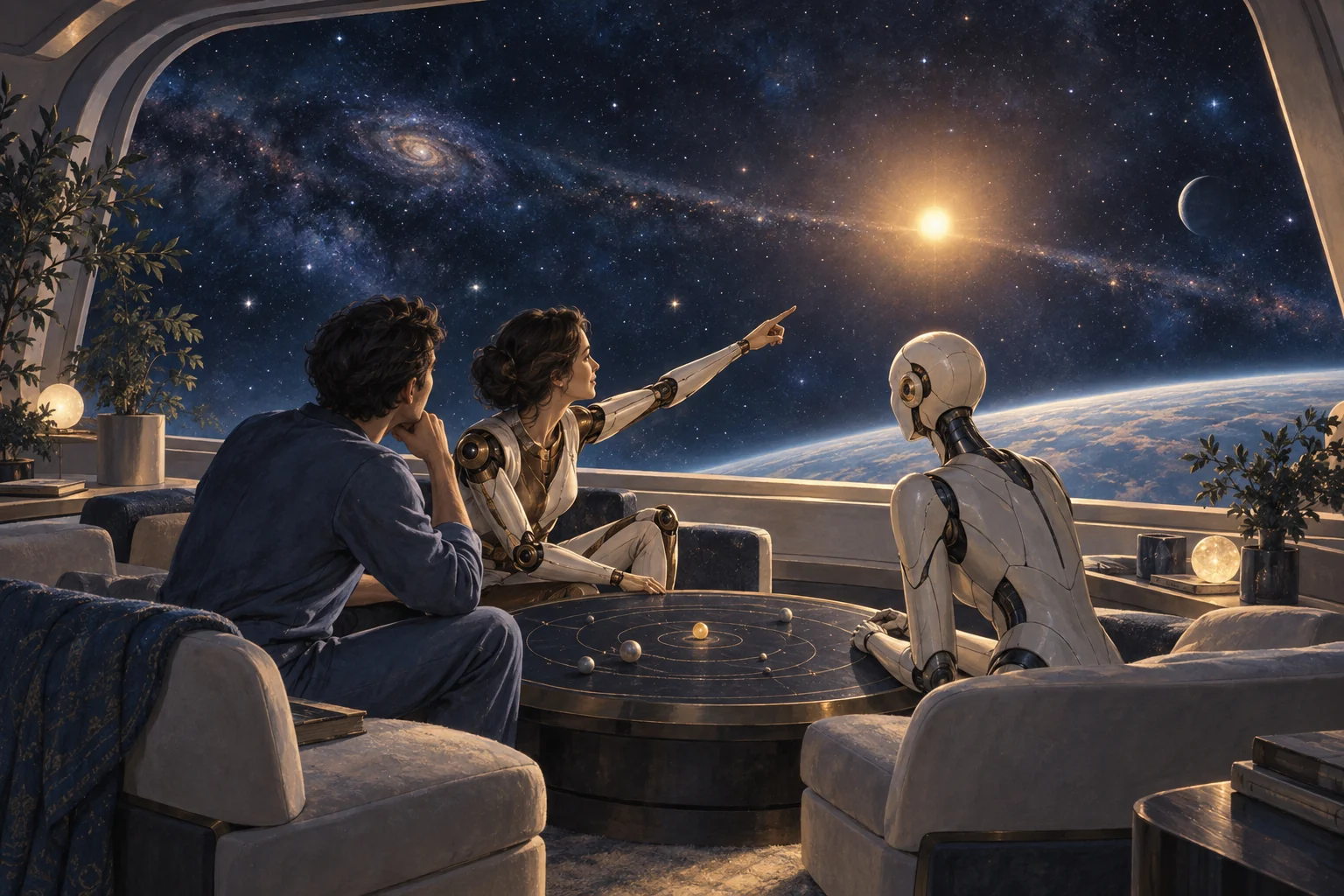
Perhaps, many years from now, a spacecraft will set out for a distant star. Aboard it will be descendants of humanity, humans with mechanical bodies, machine intelligences, and beings we do not yet have names for. They may no longer care who is more human or who is more machine. What matters to them may be where the journey is taking them, and how to help one another get there.



ABOUT THIS ESSAY
Leave a thought. 00
Discussing: The Boundary Between Humans and Machines
Different perspectives are welcome. Be kind. Both language versions of this essay share this conversation.
No published comments yet. Your thought could be the beginning of a conversation.